9 Most Common Washing Machine Problems (And How to Fix Them)
Few things disrupt a household routine faster than a washing machine that won’t cooperate. Whether it’s refusing to drain, shaking violently during the spin cycle, or leaking water across your laundry room floor, most washing machine problems fall into a handful of common categories and knowing what’s causing them can help you decide whether it’s a quick fix or time to call a professional.
Here are the 9 most common washing machine problems homeowners run into, what typically causes them, and how to know when it’s time for a repair.
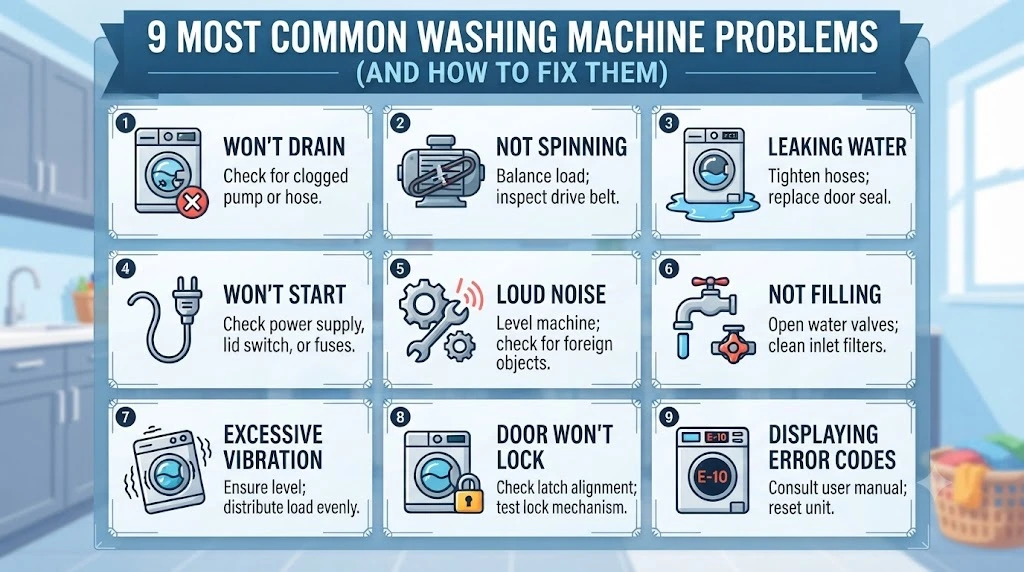
1. Washing Machine Won't Drain
A washer that fills with water but won’t drain is one of the most common service calls. Common causes include:
- A clogged drain hose or pump filter (often trapped coins, lint, or small clothing items)
- A kinked or improperly positioned drain hose
- A faulty drain pump
Quick check: Unplug the machine and inspect the drain hose for clogs or kinks before assuming the pump has failed.
2. Washing Machine Not Spinning
If your clothes come out soaking wet at the end of the cycle, the spin function isn’t working correctly. This is often caused by:
- An unbalanced load triggering a safety sensor
- A worn or broken drive belt
- A faulty lid switch (top-load) or door latch (front-load) not signaling the machine to spin
3. Washing Machine Leaking From the Bottom
A puddle under your washer usually points to one of these issues:
- A worn door seal or gasket (common in front-load washers)
- A loose or damaged water inlet hose
- A cracked tub or damaged pump seal
Leaks should be addressed quickly prolonged water exposure can lead to mold growth and floor damage.
4. Washing Machine Won't Start
When the washer won’t power on or start a cycle at all, check these common culprits first:
- The unit isn’t fully plugged in, or a breaker has tripped
- The door or lid isn’t fully closed (a safety feature)
- A blown thermal fuse or faulty control board
5. Washing Machine Making Loud Noise
Unusual banging, grinding, or squealing during a cycle is one of the most common (and most alarming) issues. Typical causes include:
- Unbalanced loads
- Worn drum bearings
- Foreign objects caught between the drum and tub
- A worn or loose drive belt
6. Washing Machine Not Filling With Water
If the drum stays empty even after you start a cycle, check:
- Whether the water supply valves behind the machine are fully open
- A clogged water inlet filter/screen
- A faulty water inlet valve
7. Washing Machine Shaking or Vibrating Excessively
Excessive shaking, especially during the spin cycle, is often caused by:
- An unlevel washing machine (use a level to check and adjust the feet)
- Shipping bolts that were never removed after installation
- An unbalanced or overloaded drum
8. Washing Machine Door Won't Lock
Front-load washers require the door to lock before starting, and a faulty door latch assembly is a common point of failure. This is typically caused by a worn latch mechanism or a misaligned door.
9. Washing Machine Displaying Error Codes
Modern washers use error codes to flag specific problems (drainage issues, water level sensor faults, motor problems, and more). Error codes vary by brand, so it’s best to check your manual or have a technician read the code accurately rather than guessing at the cause.
When to Call a Professional
Some issues like clearing a clogged drain hose or leveling the machine are safe for most homeowners to handle. Others involve internal electrical components, water lines, or the drum assembly, where a mistake can cause further damage or safety risks. If you’ve checked the basics and the problem persists, it’s time to call a licensed technician.
Signs you need professional repair:
- The issue returns after you’ve already attempted a fix
- You see standing water or smell burning
- The machine displays a persistent error code
- The noise or vibration is getting worse over time
San Antonio Homeowners: Watch for Hard Water Buildup
San Antonio’s hard water can accelerate wear on water inlet valves, hoses, and internal components contributing to leaks, poor water flow, and reduced washer lifespan faster than in areas with softer water. If your washer is having recurring performance issues, hard water mineral buildup may be part of the problem.
Get a Fast, Accurate Diagnosis
Guessing at a washing machine repair can lead to wasted time and unnecessary parts purchases. At Pro Appliance Repair, our licensed technicians diagnose the exact issue and provide upfront pricing before any work begins serving San Antonio, Stone Oak, Alamo Heights, Leon Valley, Helotes, and surrounding areas.
FAQ's
Why is my washing machine not draining or spinning?
This combination usually points to a clogged drain pump, a kinked hose, or a failed lid/door switch preventing the spin cycle from starting.
Is it normal for a washing machine to shake during the spin cycle?
A small amount of vibration is normal, but excessive shaking usually means the machine isn’t level or the load is unbalanced.
How much does washing machine repair typically cost?
Costs vary by issue, but minor repairs (hoses, filters) are often under $150, while major component repairs (motor, control board) can range from $200–$450.
Can hard water really damage my washing machine?
Yes, mineral buildup from hard water can clog valves and hoses over time, which is a common issue for San Antonio homes.
Dealing with a washing machine problem?
Schedule a repair with Pro Appliance Repair today or call +1 (726) 264-9100 for fast, reliable service.