
What Should I Look for When Buying a Dishwasher?
Replacing a dishwasher isn’t something most people do often, which makes it easy to get overwhelmed by the sheer number of models, price points, and feature lists at the store. Some of those features genuinely matter day to day. Others are marketing noise that adds cost without adding much value.
Here’s a practical breakdown of what’s actually worth paying attention to when you’re shopping for a new dishwasher.
Start With the Right Size
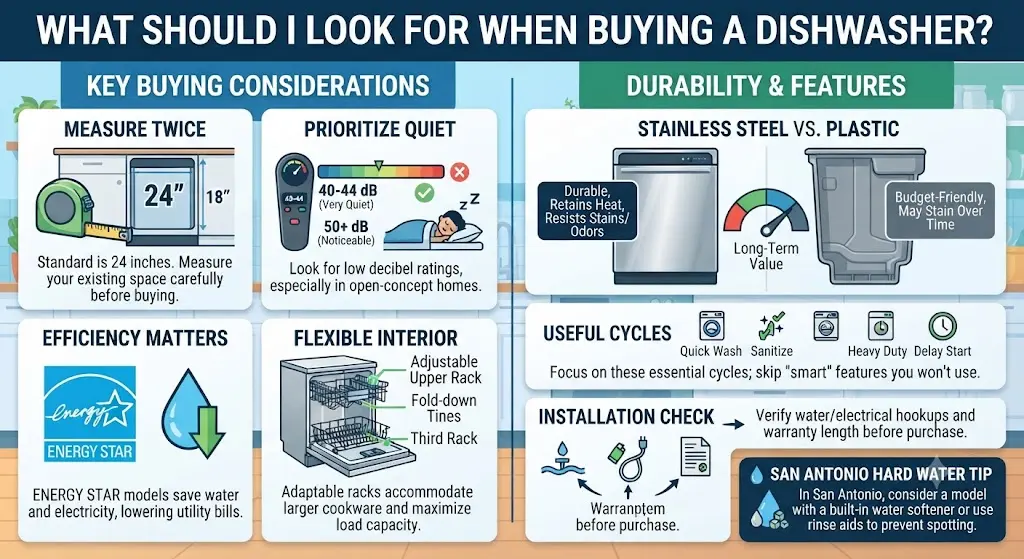
Before anything else, measure the space where your current dishwasher sits. Standard dishwashers are 24 inches wide, but compact models (around 18 inches) exist for smaller kitchens. Getting this wrong is the single most common — and most expensive — buying mistake, since it can mean a return, a reinstallation, or costly cabinet modifications.
Beyond the exterior dimensions, pay attention to interior capacity too. A larger household benefits from a model with a third rack or adjustable tines that can fit more dishes per load, cutting down on how often you run the machine.
Noise Level Matters More Than You'd Think
Dishwashers are rated in decibels (dB), and the difference between models is bigger than most buyers expect. A dishwasher around 40-44 dB runs quietly enough that you’d barely notice it during a conversation nearby. Anything above 50 dB tends to be noticeably loud, especially in open-concept kitchens or homes where the dishwasher runs overnight.
If you’re shopping in person, ask to see the decibel rating on the spec sheet it’s usually printed clearly, and it’s one of the easiest ways to compare models at a glance.
Energy and Water Efficiency
Look for the ENERGY STAR label, which indicates the model meets efficiency standards for both water and electricity use. Over the lifespan of the appliance, an efficient dishwasher can meaningfully lower your utility bills compared to an older or non-certified model, particularly if you run it daily.
It’s also worth checking the estimated water usage per cycle listed on the EnergyGuide label. Older dishwashers can use significantly more water per load than newer efficient models, which adds up over years of regular use.
Cycle Options That Are Actually Useful
Dishwashers today come loaded with cycle options, but a handful genuinely earn their place:
- Quick or express wash— useful for lightly soiled dishes when you’re short on time
- Sanitize cycle— runs at a higher temperature, useful for households with young kids or anyone wanting extra assurance
- Heavy-duty or pots-and-pans cycle— handles stuck-on food without needing to pre-scrub as much
- Delay start— lets you run the dishwasher during off-peak electricity hours if your area has time-of-use rates
Beyond these, many additional “smart” cycle presets are more about marketing than daily usefulness it’s fine to skip a model based on a long feature list alone.
Rack Design and Flexibility
Adjustable upper racks, fold-down tines, and a dedicated silverware section (especially a third rack at the bottom) make a bigger practical difference than most people expect. If you regularly wash larger items like mixing bowls or baking sheets, look for a model with enough clearance and flexible rack configurations to fit them without rearranging the whole load.
Interior Material: Stainless Steel vs. Plastic Tub
Dishwashers typically come with either a stainless steel or a plastic interior tub. Stainless steel tends to retain heat better (helping dishes dry faster), resists staining and odors, and generally lasts longer. Plastic tubs are more budget-friendly but may be more prone to staining and can hold onto odors over time. If long-term durability is a priority, a stainless interior is usually worth the extra cost.
Drying Performance
Traditional heat-drying uses a heating element to dry dishes at the end of the cycle, while newer condensation or fan-assisted drying systems use less energy but may leave plastic items slightly damp. If you wash a lot of plastic containers, it’s worth checking reviews specifically about drying performance for that model, since this varies more between brands than most other features.
Brand Reliability and Parts Availability
Established brands with a strong repair network make future maintenance easier and more affordable. Before buying, it’s worth a quick search to confirm that replacement parts (like door seals, spray arms, or control boards) are widely available for the model you’re considering this becomes relevant the day something eventually needs fixing.
Budget: What You're Really Paying For
Dishwashers generally fall into a few price tiers:
- Entry-level: Basic cycles, standard noise levels, plastic tub
- Mid-range: Better noise insulation, stainless tub, more cycle options
- High-end: Premium quiet operation, advanced rack systems, longer warranties
Spending more doesn’t always mean a better dishwasher for your specific needs a family that runs one full load a day doesn’t necessarily benefit from premium features designed for heavy daily use.
A Few Things Worth Double-Checking Before You Buy
- Confirm the door swing direction won’t interfere with nearby cabinets or drawers
- Check the warranty length on both parts and labor, not just parts alone
- If replacing an older unit, verify your existing water line and electrical connections are compatible, or budget for updates
Why This Matters for San Antonio Homeowners
San Antonio’s hard water can affect dishwasher performance over time, contributing to spotting on glassware and mineral buildup inside the unit. If hard water is a concern in your home, look for a model with a built-in water softener setting, or plan on using a rinse aid and occasional dishwasher cleaner to keep performance consistent.
Get Expert Advice Before You Buy
If you’re unsure whether your current dishwasher issue is worth repairing versus replacing, a quick professional opinion can save you from spending money in the wrong direction. Pro Appliance Repair provides honest assessments for San Antonio homeowners, along with dishwasher repair and installation services when replacement is the right call.
FAQ's
What size dishwasher do I need?
Most homes use a standard 24-inch model. Smaller kitchens or apartments may need an 18-inch compact dishwasher — always measure your existing space before buying.
What decibel rating is considered quiet for a dishwasher?
Ratings around 40-44 dB are considered quiet, while anything above 50 dB tends to be noticeably audible during normal conversation nearby.
Is a stainless steel interior worth the extra cost?
Generally yes, if long-term durability and better drying performance matter to you. Stainless interiors tend to resist staining and odors better than plastic tubs.
Should I buy a dishwasher with a lot of cycle options?
Not necessarily. A handful of cycles (normal, quick wash, sanitize, and heavy-duty) cover most household needs extensive preset lists are often more about marketing than daily usefulness.
Ready to install a new dishwasher, or not sure if yours needs repair or replacement?
Schedule a repair with Pro Appliance Repair today or call +1 (726) 264-9100 for honest, expert guidance.